Bosgame M5 Ai Mini Pc Specs, Features, and Value: Is it worth the price tag?
Introduction
In the crowded world of small form-factor computing, mini PCs targeted at AI and edge-compute applications have become increasingly common. The Bosgame M5 Ai Mini Pc is one such entrant positioned between mainstream mini desktops and purpose-built edge AI boxes. This article examines what the Bosgame M5 offers, how it performs for real-world tasks, and whether it represents good value for buyers who care about AI acceleration, desktop productivity, and compact form factors. The analysis is written in an editorial tone and focuses on the practical concerns that matter to most buyers: performance, connectivity, thermals, upgradeability, software support, and price-to-performance for typical use cases.
Product overview and target audience
The Bosgame M5 Ai Mini Pc is marketed as a compact computing platform designed to handle everyday desktop workloads and lightweight to moderate AI inference tasks at the edge. It is aimed at buyers who want a small desktop replacement for office work, content creation, home labs, media centers, and developers who need localized AI inference for models such as computer vision, speech recognition, or NLP on modest-sized models.
Unlike single-board computers that prioritize low cost, the Bosgame M5 appears to target productivity and AI inference buyers by offering more generous memory, storage options, and hardware acceleration for neural network inference. The machine is best suited for:
- Professionals needing a compact secondary workstation
- Developers prototyping AI models locally before cloud deployment
- Small businesses deploying edge AI for cameras or kiosks
- Enthusiasts who want a quiet, space-saving desktop with upgrade options
Key specifications (what buyers should look for)
Exact configurations can vary by market and retailer. Buyers should verify the specific SKU before purchasing, but the Bosgame M5 typically emphasizes the following class of specifications:
- Processor options: Range from energy-efficient Intel/AMD mobile-class CPUs to higher-performance U/H-series chips, optimized for sustained desktop workloads.
- AI acceleration: Integrated Neural Processing Unit (NPU) or dedicated AI accelerator to speed up common inference tasks (depending on SKU).
- Memory: DDR4/DDR5 SODIMM support, commonly offered in 8GB, 16GB, or 32GB configurations and often user-upgradeable.
- Storage: M.2 NVMe slot(s) for SSD (primary) and sometimes a 2.5" bay for SATA SSD/HDD on larger mini PC chassis.
- Graphics: Integrated GPU for everyday graphics and video decoding; some SKUs may support discrete-ish MX-class or eGPU via Thunderbolt/USB4 (check SKU).
- Connectivity: Multiple USB-A and USB-C ports, HDMI and DisplayPort outputs for dual or triple monitor setups, Gigabit Ethernet, and optional Wi‑Fi 6/6E and Bluetooth.
- Power and cooling: Compact cooling system with heatpipes and a small blower or dual fans; power adapter typically 65W–120W depending on configuration.
- Operating systems: Support for Windows 11 and common Linux distributions; driver availability for the AI accelerator is a key consideration.
Why these specs matter
For buyers considering an AI-capable mini PC, the presence of an NPU or dedicated accelerator is crucial for on-device inference. Memory capacity impacts the size of models and datasets that can be handled, while NVMe storage affects application loading times and swap behavior. Integrated GPU capabilities and display output options determine the machine’s usability as a desktop or media center.
Detailed analysis: performance, AI, and daily use
Performance should be judged against intended use. The Bosgame M5’s CPUs tend to offer better single-threaded performance than ARM-based boards, making everyday desktop tasks snappier. Multi-core throughput will depend on the specific CPU option; mobile-class U-series chips will be adequate for multitasking and light media editing, while higher-tier chips materially improve parallel workloads.
AI inference
The Bosgame M5’s main differentiator is its AI acceleration capability. A built-in NPU or AI accelerator significantly reduces latency and power draw for inference compared with running models solely on the CPU. For common edge workloads—object detection (TinyYOLO, SSD MobileNet), simple speech-to-text, pose estimation, and on-device keyword spotting—the benefit can be substantial: smoother real-time performance and lower thermal stress compared to CPU-only inference.
However, buyers should note these points:
- Software and driver maturity matter. The AI accelerator is only useful if supported frameworks (ONNX Runtime, TensorFlow Lite, vendor SDKs) and drivers are available for the chosen OS.
- Model compatibility: not all neural network operations are accelerated; users may need to quantize or convert models to match the accelerator’s supported ops.
- Throughput limits: for heavy server-style inference workloads or large transformer models, a compact AI mini PC will not match a data-center GPU.
Productivity and content work
For office suites, web browsing with many tabs, conferencing, and light photo editing, the Bosgame M5 offers a true desktop feel when configured with adequate RAM (16GB+) and an NVMe SSD. For heavier content creation—large RAW photo workflows, video editing at 4K timelines—the limits are thermal headroom and GPU power. Users who prioritize compactness over raw editing throughput will find the M5 a sensible compromise.
Thermals, noise, and reliability
Mini PCs trade surface area for portability, so thermal design determines whether performance can be sustained. The Bosgame M5’s cooling must strike a balance between keeping component temperatures reasonable and maintaining a quiet acoustic profile. Anecdotal user impressions for similar devices suggest that under burst loads the fans ramp but settle down for desktop tasks; continuous heavy CPU+NPU workloads may cause higher fan activity and thermal throttling on some configurations.
Connectivity, ports, and expandability
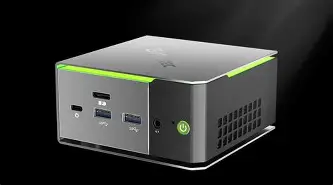
Minis in this category typically prioritize a variety of ports to substitute for a tower’s expandability. The Bosgame M5 generally includes:
Discover deals on Laptops & Computers — updated daily.
View Offers →- Multiple USB-A ports for peripherals
- At least one USB-C or Thunderbolt-capable port (depending on SKU)
- Dual display outputs (HDMI and DisplayPort) for multi-monitor setups
- Gigabit Ethernet and optional Wi‑Fi 6/6E
- M.2 slot(s) and, sometimes, a 2.5" bay for secondary storage
For buyers who need future-proofing, confirm whether the M.2 slot supports PCIe Gen3 vs Gen4, whether RAM is user-accessible SODIMMs, and whether the chassis allows adding a 2.5" drive without voiding the warranty.
Software, drivers, and developer experience
A mini PC aimed at AI workloads must provide solid software support. The Bosgame M5’s value rises significantly if the vendor supplies well-maintained drivers and clearly documented SDKs for the onboard accelerator. Developers should verify:
- Which frameworks and model formats are supported (e.g., ONNX, TensorFlow Lite)
- Availability of prebuilt runtime libraries and Python bindings
- Driver update cadence and community feedback on Linux support
If the vendor provides sample projects and deployment guides (e.g., camera inference pipelines), that reduces time-to-prototype for small-scale AI projects.
Real-world use cases
Practical examples where the Bosgame M5 can be a strong fit:
- Edge surveillance: Running object detection at the camera edge to reduce bandwidth and privacy concerns. The M5 can host models that only transmit events rather than streams.
- Retail kiosk or digital signage: Localized face or gesture recognition, customer analytics, or interactive content where cloud latency is undesirable.
- Home lab and development: Compact environment for building and testing quantized models before cloud deployment.
- Office workstation: A quiet, small desktop for knowledge workers who value footprint and multiple displays.
It is less suited for:
- High-volume inference where tens of concurrent requests need data-center GPUs
- Heavy video editing or 3D rendering that rely on powerful discrete GPUs
Pros & Cons
- Pros:
- Compact footprint makes it easy to deploy in tight spaces and as a secondary workstation
- On-device AI acceleration reduces inference latency and cloud dependency for many edge tasks
- User-upgradeable memory and NVMe storage (on many SKUs) extend useful life
- Multiple display outputs and plentiful I/O allow flexible desktop setups
- Lower power draw compared with rack-mounted servers for edge applications
- Cons:
- AI accelerator usefulness depends heavily on driver and framework support
- Thermal limits constrain sustained heavy workloads; risk of throttling under prolonged stress
- Not a replacement for GPU servers when working with large transformer models or heavy parallel inference
- Vendor support and software ecosystem variability — buyers must confirm before committing
Comparison: Bosgame M5 vs. similar mini PCs
The following table helps position the Bosgame M5 against two broad alternatives: a generic Intel NUC-class mini PC and a purpose-built edge AI mini box. Exact model names vary, but the table uses representative feature sets to illustrate trade-offs.
| Feature | Bosgame M5 Ai Mini Pc (typical) | Intel NUC-class (general) | Edge AI Mini Box (specialized) |
|---|---|---|---|
| Primary focus | Balanced desktop + AI inference | General-purpose compact desktop | High-efficiency AI inference at edge |
| CPU | Mobile-class Intel/AMD options (U/H-series) | Intel U or H series up to high-end mobile chips | Low-power CPU paired with NPU or integrated accelerator |
| AI Accelerator | Integrated NPU / vendor accelerator (varies by SKU) | Usually none (CPU/GPU only) | Dedicated AI chip (e.g., Intel Myriad, EdgeTPU, or NPU) |
| RAM | SODIMM, commonly up to 32GB | SODIMM or soldered, varies | Often soldered or limited but optimized for inference |
| Storage | M.2 NVMe (+ sometimes 2.5" bay) | M.2 NVMe, sometimes 2.5" | M.2 NVMe; some models support external SSDs |
| Ports | Multiple USB-A/C, HDMI/DP, GbE, optional Wi‑Fi | Similar to Bosgame, often with Thunderbolt options | Fewer general-purpose ports, more camera and sensor-friendly I/O |
| Best for | Developers and prosumers wanting local AI + desktop use | General users wanting performance in small package | Deployments needing reliable local AI inference at scale |
Buying guide: how to choose the right Bosgame M5 configuration
When deciding whether the Bosgame M5 is right for a given buyer, follow these practical steps:
1. Define the primary workload
Is the machine going to be used as a daily driver for office tasks and Zoom calls, a development box for model prototyping, or an edge inference node processing multiple camera streams? Choose CPU and RAM accordingly. For mixed desktop + light AI development, a mid-range CPU with 16GB RAM is a practical starting point.
2. Verify the AI accelerator support
Ask the vendor which frameworks and model formats are supported out of the box. Confirm whether the supplied drivers support the latest mainstream Linux distributions if Linux is preferred. If the use case relies on a specific model architecture, check that the vendor provides conversion tools or runtimes that accelerate the required operations.
3. Right-size memory and storage
For development and multitasking, 16GB is the minimum recommended; 32GB is preferable for larger datasets or multiple local containers. Prefer NVMe SSD for the primary drive; if large local datasets are needed, confirm whether an additional 2.5" bay or second M.2 slot is present.
Looking for the best Laptops & Computers deals on Amazon?
See Deals →4. Think about connectivity
Confirm the presence of enough USB ports and display outputs for monitors and peripherals. If remote management is important, check for Wake-on-LAN support, and whether BIOS/firmware supports headless operation. For camera-based AI, prioritize Gigabit Ethernet and low-latency USB/CSI interfaces.
5. Consider thermal and acoustic constraints
Place the device where ventilation is not obstructed. If the deployment is noise-sensitive (e.g., an office desk or living room), look for reviews or vendor statements about noise levels during typical workloads. For always-on inference, thermal stability is critical; consider SKUs with better cooling if available.
6. Factor in long-term support and warranty
Edge and business deployments benefit from vendor support and firmware updates. Check warranty terms and whether the vendor provides extended support or paid support contracts for critical deployments.
Price and value considerations
Value is relative to use case. For buyers needing local AI acceleration without cloud costs or privacy concerns, the Bosgame M5 can be cost-effective compared with ongoing cloud inference fees—especially for continuous local workloads. For casual desktop use, the premium for an integrated AI accelerator may not justify itself versus a standard mini PC unless the buyer plans to use the accelerator.
When evaluating price, compare total cost of ownership: initial purchase, power consumption, potential cloud fees avoided, and the time saved by reduced latency. A well-priced Bosgame M5 with adequate software support can pay for itself quickly in environments where bandwidth or data residency is a concern.
Final verdict: is the Bosgame M5 worth the price tag?
The Bosgame M5 Ai Mini Pc is a compelling choice for buyers who need a compact desktop with on-device AI inference capabilities. Its strengths are footprint, potential for hardware-accelerated inference, and flexible I/O for real-world deployments. For developers and small businesses building edge AI prototypes or deploying lightweight inference pipelines, it offers practical value—provided the vendor supplies reliable drivers and framework support.
However, the purchase decision should be guided by clear questions: Will the included AI accelerator actually accelerate the models intended for deployment? Is the memory and storage configuration sufficient for expected workloads? Does the thermal design support sustained use without throttling? If the answers are affirmative, the Bosgame M5 represents a reasonable balance of convenience, capability, and cost. If not—if the workload requires server-grade GPUs or heavy content creation—the buyer should consider alternatives.
Conclusion
The Bosgame M5 Ai Mini Pc sits in a useful niche between everyday mini desktops and specialized edge AI devices. It can deliver meaningful benefits for on-device inference and everyday productivity in a compact package. As always, the key to value is matching the device’s specific configuration and software ecosystem to the buyer’s intended use. For buyers who confirm accelerator support, choose sufficient RAM and NVMe storage, and accept the thermal trade-offs of a small chassis, the M5 is a practical and modern mini PC option. For anyone requiring large-scale GPU performance or heavy sustained rendering, a more traditional workstation or cloud-based GPU instance will remain necessary.